Kit type
Other
Is this your first build?
No, I have built before
How many kits have you built?
few
Finish type
Other
Pickups and electronics
Pickups
• Gibson humbucker
• Strat-style pickup
 Electronics
The electronics are based on a Jazz Bass-style, two-volume, continuously variable blend circuit.
I used two CTS A500k pots. On the Strat side, I added a 470kΩ resistor to bring the effective resistance down to around 250kΩ.
I also wanted to avoid that harsh, overly bright “ice-pick” tone when either volume control is turned down.
So I installed a treble-bleed circuit consisting of a 220kΩ resistor and a 0.001μF capacitor in parallel, connected between the pickup hot output and the volume-control output.
The signal then goes through a waterproof kill switch before reaching the output jack.
In other words:
I can continuously blend the two pickups in whatever proportion I want, while keeping the tone from getting excessively thin or bright when I roll the volume down.
Any modifications?
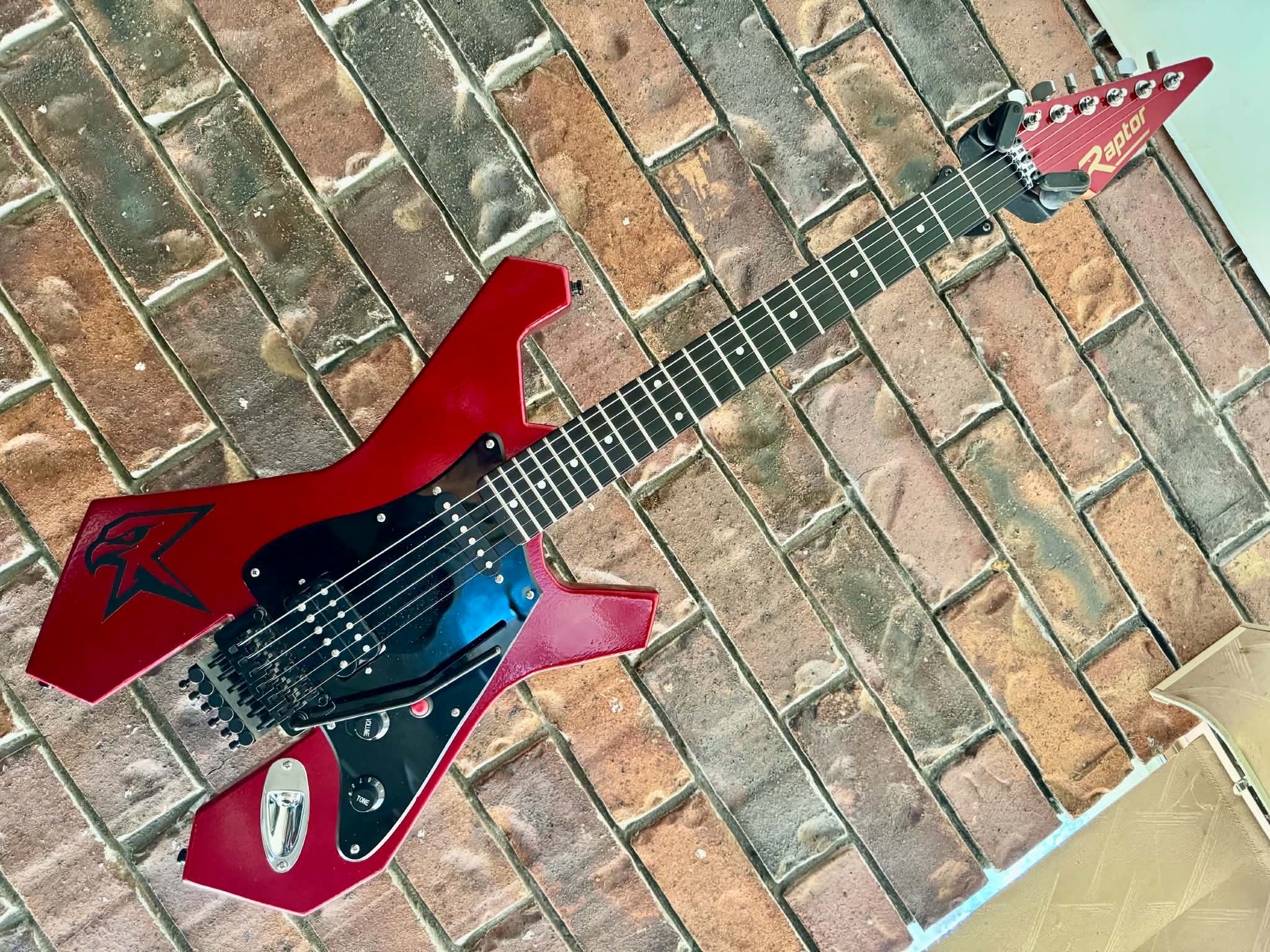
Kit was blank, so all parts were modified including my Main Idea: KEEP IT LIGHT!
I’ve always had a theory that:
“The wood behind the bridge on an electric guitar contributes very little to the tone and is mostly just dead weight.”
So I decided to put my theory to the test and cut away the wood behind the bridge.
Even with a relatively heavy piece of hardware like a Floyd Rose, I managed to get the total weight down to just 3.3 kg (7.3 lbs).
There are actually two positions for the rear support/tail section.
Using the lower position tilts the neck upward even more when playing, which makes fast picking and shredding more comfortable.
I also reduced the size of the headstock to match the lightweight body.
The result?
Virtually ZERO neck dive!
Because the guitar is so light and well balanced, it is incredibly comfortable to play for long periods without getting tired.
 And Then There Was the “No-Tail” Problem…
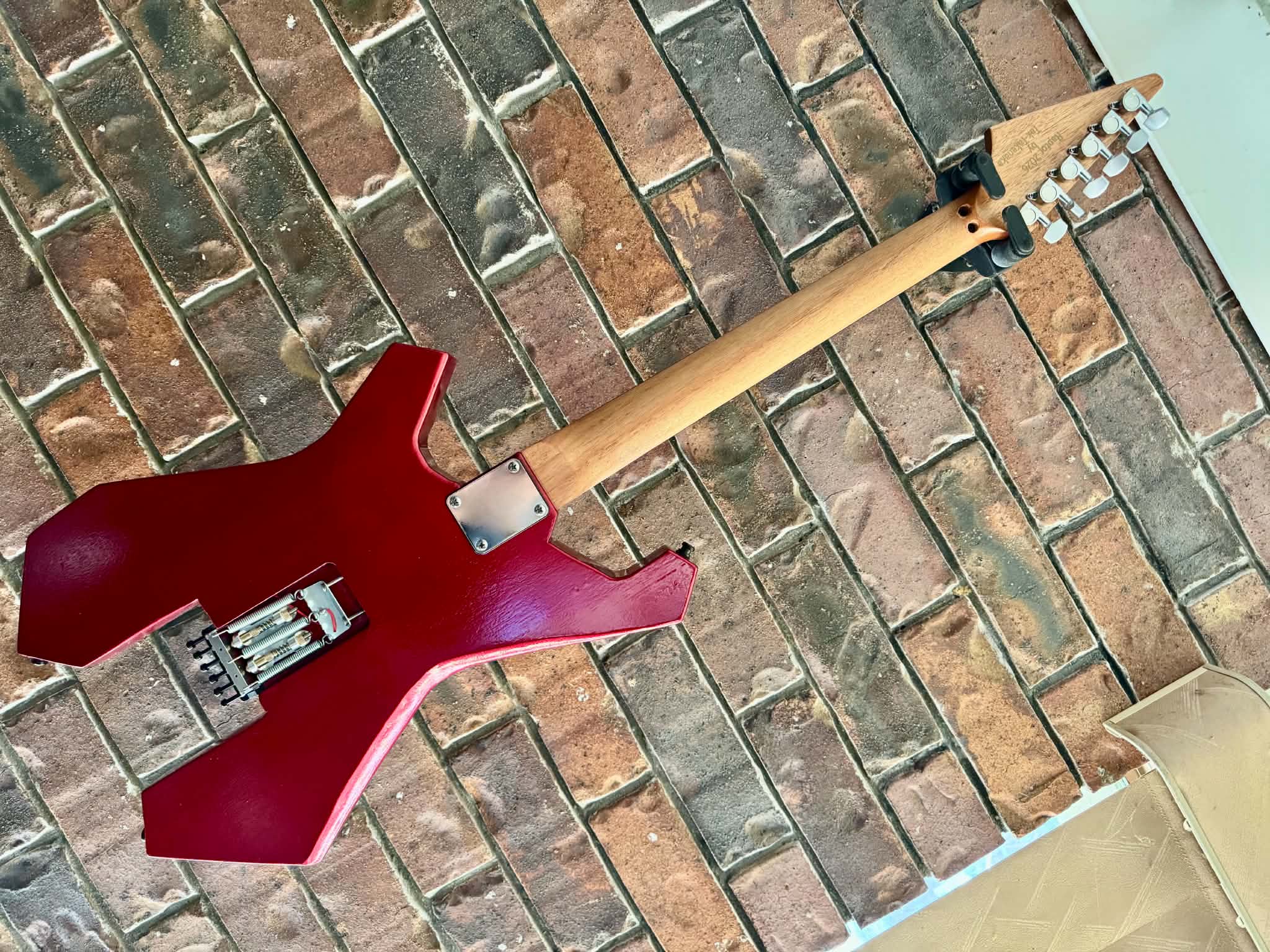
Because of the “no-tail” construction, removing all the strings at once creates a problem: the Floyd Rose springs pull the tremolo mechanism much too far backward.
So I installed a dual-cylinder counterbalancing tremolo stabilizer inside the spring cavity.
That keeps the tremolo under control even when all the strings are removed.
This is one of the fun things about building your own guitar—you can come up with solutions to problems that wouldn’t even exist on a conventional guitar! 
 So there it is: a completely original guitar designed specifically for ’70s–’80s hard rock, built around my own ideas about weight, balance, electronics and playability.
There are plenty of great guitars you can buy off the shelf, but there is something particularly satisfying about building one where every strange little feature exists because you decided it should! 
The story
My 100% Original, Homemade Guitar for ’70s–’80s Hard Rock is FINALLY Finished!
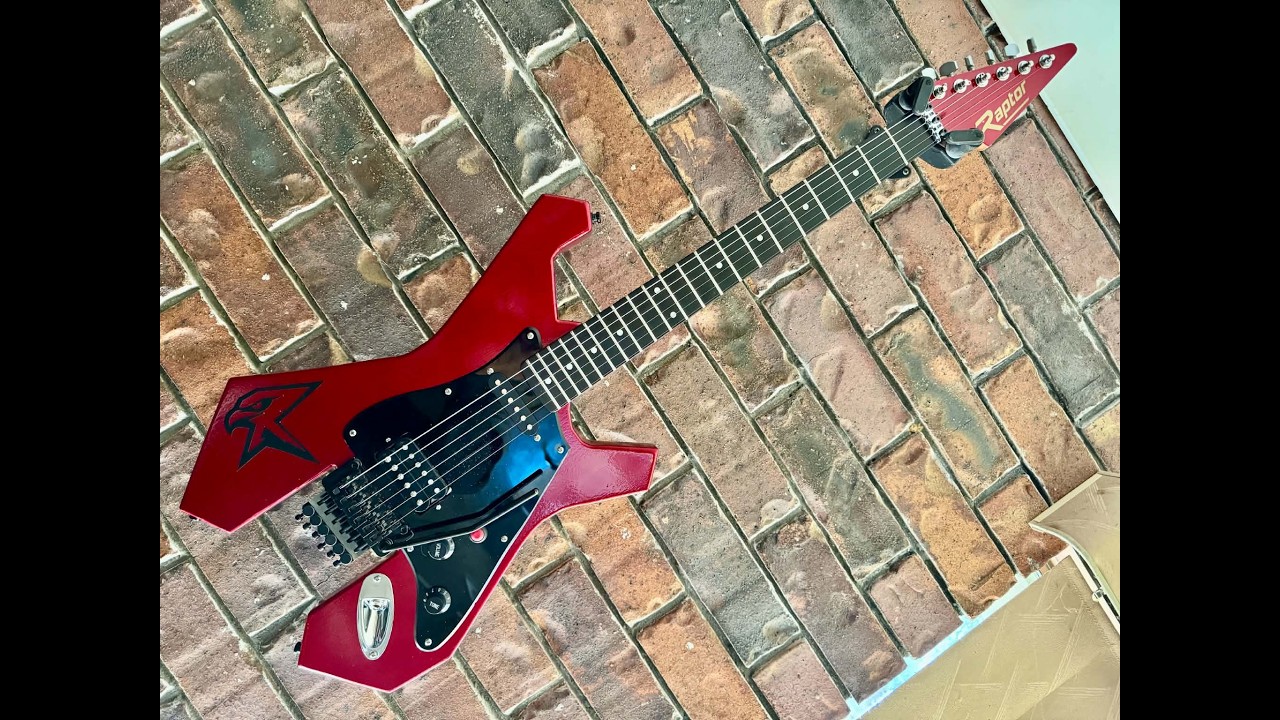
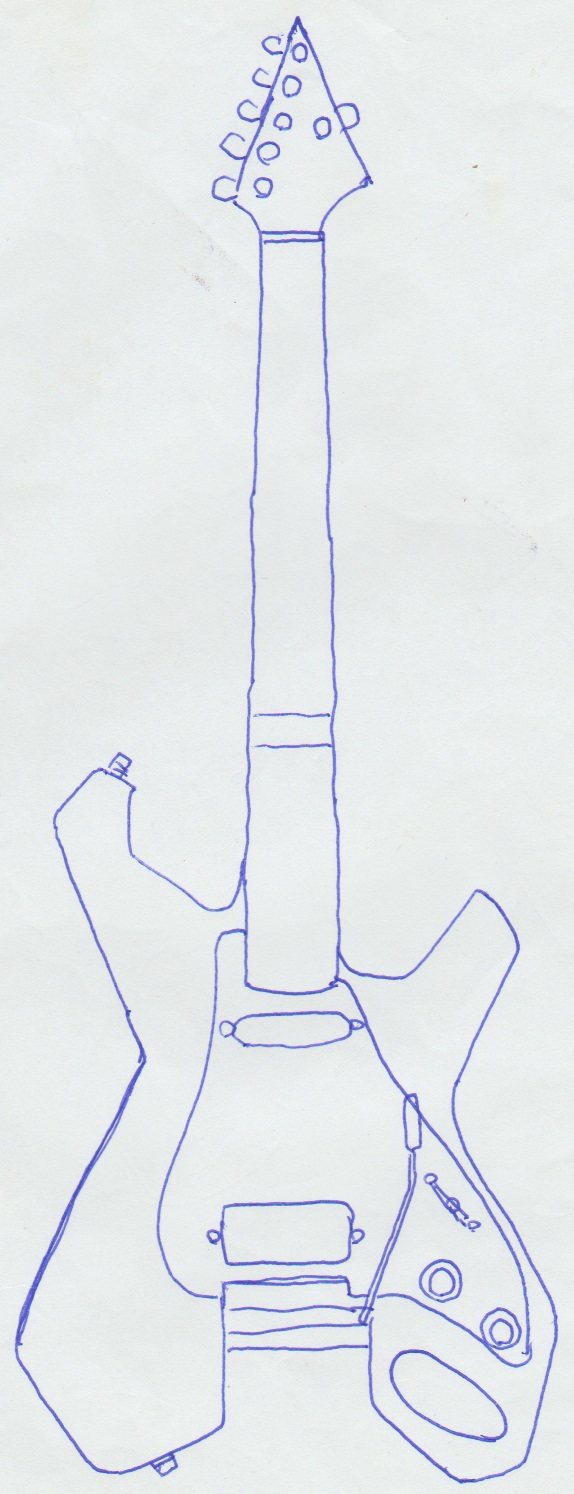
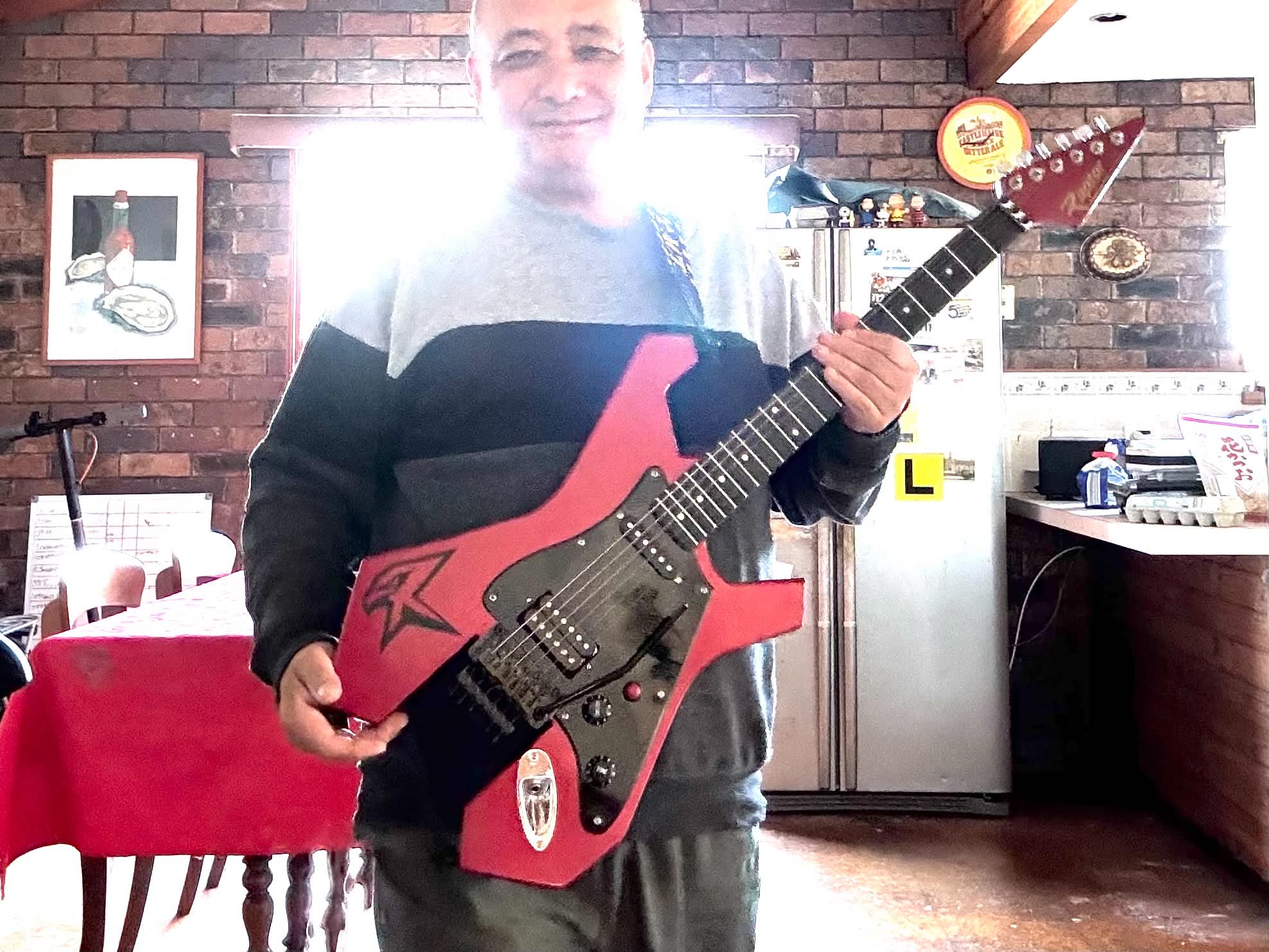
I designed and built this guitar at home from scratch, based entirely on what I wanted in a guitar for classic ’70s and ’80s hard rock.
 Basic Specs
Wood
• Body: Mahogany
• Fingerboard: Ebony
Bridge
• Original 1980s Floyd Rose
Pickups
• Gibson humbucker
• Strat-style pickup
Electronics
The electronics are based on a Jazz Bass-style, two-volume, continuously variable blend circuit.
I used two CTS A500k pots. On the Strat side, I added a 470kΩ resistor to bring the effective resistance down to around 250kΩ.
I also wanted to avoid that harsh, overly bright “ice-pick” tone when either volume control is turned down.
So I installed a treble-bleed circuit consisting of a 220kΩ resistor and a 0.001μF capacitor in parallel, connected between the pickup hot output and the volume-control output.
The signal then goes through a waterproof kill switch before reaching the output jack.
In other words:
I can continuously blend the two pickups in whatever proportion I want, while keeping the tone from getting excessively thin or bright when I roll the volume down.
 Finish
After sealing the grain, I applied primer, followed by Mazda 46V automotive paint, and finished it with a hard 2K clear coat, probably a polycarbonate-type clear.
It gives the guitar a very tough automotive-style finish.
 The Main Idea: KEEP IT LIGHT!
I’ve always had a theory that:
“The wood behind the bridge on an electric guitar contributes very little to the tone and is mostly just dead weight.”
So I decided to put my theory to the test and cut away the wood behind the bridge.
Even with a relatively heavy piece of hardware like a Floyd Rose, I managed to get the total weight down to just 3.3 kg (7.3 lbs).
There are actually two positions for the rear support/tail section.
Using the lower position tilts the neck upward even more when playing, which makes fast picking and shredding more comfortable.
I also reduced the size of the headstock to match the lightweight body.
The result?
Virtually ZERO neck dive!
Because the guitar is so light and well balanced, it is incredibly comfortable to play for long periods without getting tired.
And Then There Was the “No-Tail” Problem…
Because of the “no-tail” construction, removing all the strings at once creates a problem: the Floyd Rose springs pull the tremolo mechanism much too far backward.
So I installed a dual-cylinder counterbalancing tremolo stabilizer inside the spring cavity.
That keeps the tremolo under control even when all the strings are removed.
This is one of the fun things about building your own guitar—you can come up with solutions to problems that wouldn’t even exist on a conventional guitar!
So there it is: a completely original guitar designed specifically for ’70s–’80s hard rock, built around my own ideas about weight, balance, electronics and playability.
There are plenty of great guitars you can buy off the shelf, but there is something particularly satisfying about building one where every strange little feature exists because you decided it should!
And yes, the BGM is my own guitar playing over a royalty-free karaoke MP3, so I’m using a free-to-use backing track rather than the original copyrighted recording.